It's Not the Miles. It's the Story.
One lesson that took me years to understand — and that changes everything about why you document a trip.
Here is something I have learned over the last few years that I wish someone had told me earlier.
It is not about what you sacrifice. Not about how much you suffered, how big the achievement was, how far you rode, or how fast you got there. None of that is what makes people remember you or care about what you did.
It is how well you document it.
The Evidence Is Everywhere
Ted Simon rode around the world — twice. Enormous distances, enormous sacrifice, enormous experience. But he was not the first. He did not ride the most countries or the most kilometres. He wrote excellent books. That is why he inspired a generation of travellers. The writing was the thing.
Ewan McGregor rode around the world too. Many people before him did it further, with less money, no team, no camera crew, and experienced far more genuine adventure. He made a TV show about it. Most people remember Long Way Round. Almost nobody remembers the others.
And then there is George Francis Train — the man who actually travelled around the world in 80 days. He took a real risk. He did it first. Jules Verne used his story and not his name. He did not risk anything. He barely travelled at all.
Barely anyone knows George Francis Train. Almost everyone knows Phileas Fogg.
There is one small monument for Train — in front of the train station in his home town. There are eight for Jules Verne — who was not really a great traveller. Merely a good writer. He inspired generations. He inspired me.
Is that fair? No. But it is what it is.
Legends, Silent Heroes and the Problem With Both
Everyone loves a legend. But to become one, you usually have to die first. The story gets told at the funeral, polished over decades, and handed down until the rough edges disappear and only the myth remains.
Everyone also loves the silent hero — the one who simply does, without fanfare, without documentation, without asking for recognition. There is something genuinely admirable about that. But here is the uncomfortable truth: in 2026, if you do not tell your story, nobody else will. Everyone is busy with their own story. The algorithm does not reward silence. The silent hero is forgotten before the engine cools down.
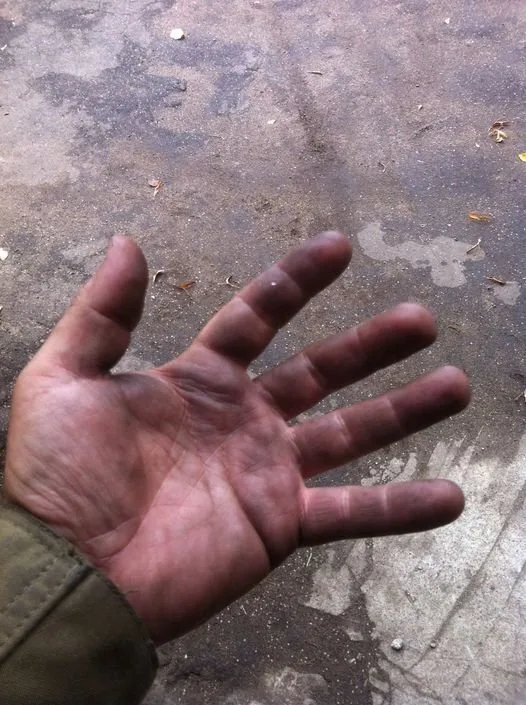
I do not have time to wait until I am dead so that somebody else tells my story — probably wrong, probably incomplete, definitely without the smell of two-stroke and the specific misery of a tent full of snow at -14°C.
So I tell it myself. Now. While I still remember.
What This Means For Anyone Who Rides
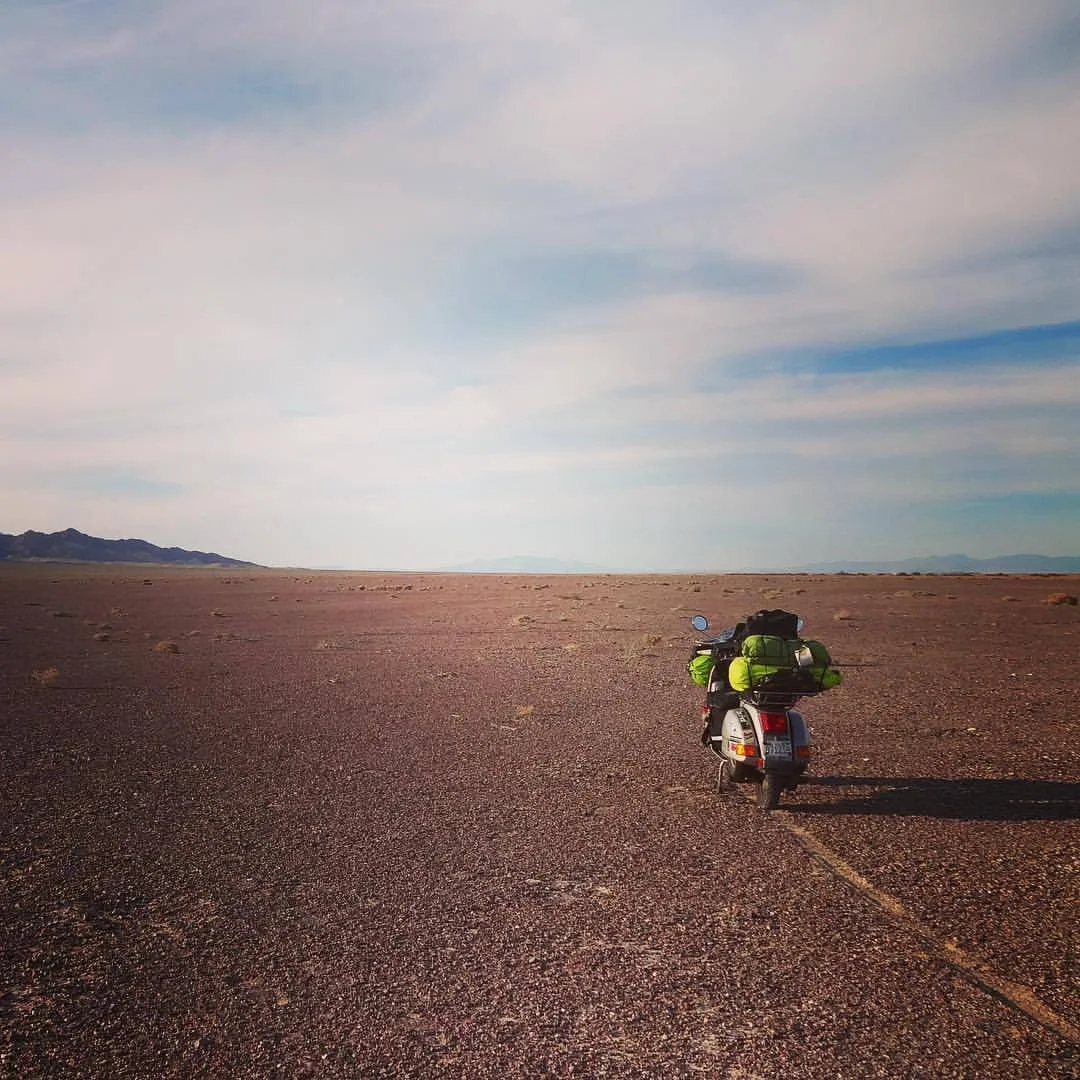
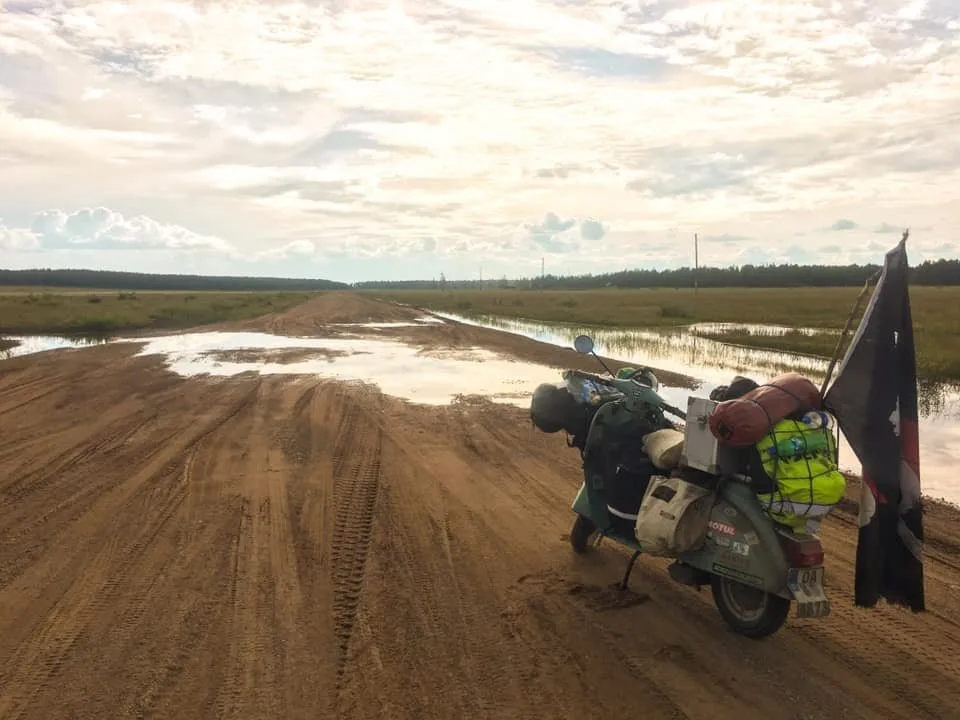
You can just ride. You can cover 160,000 km across 51 countries and territories, set records, raise money, sleep in ditches and push through deserts, and keep it all to yourself. That is a valid life. A full one.
But will you inspire anyone? Will you be remembered? Probably not.
I am not Ted Simon. I am not Ewan McGregor. I am certainly not Jules Verne. I am not rich, not famous, not particularly successful in any conventional sense. I did not do the biggest trip. I am not the best mechanic or the greatest adventurer.
But I document. Every breakdown, every border crossing, every ridiculous decision that made sense at the time. Not because I think I am important — but because a story that is not told does not exist. And because somewhere out there, someone is sitting in an office that is slowly killing them, reading something I wrote, and thinking: maybe I could do something like that.
If that happens even once, the documentation was worth it.
Also: I want to remember. The details fade faster than you think.
Frequently Asked Questions
Why do you write about your trips instead of just riding? Because a ride that is not documented disappears. Ted Simon, Ewan McGregor, Jules Verne — none of them were the most extreme. All of them told the story well. That is what lasts.
Does documentation take away from the experience? The opposite. Writing forces you to understand what actually happened. The meaning arrives in the telling, not always in the living.
Do you think you will be remembered? Honestly? I have no idea. But I would rather try than not. And in the meantime, I have the notes.
Want to read more?