About Solo Riding
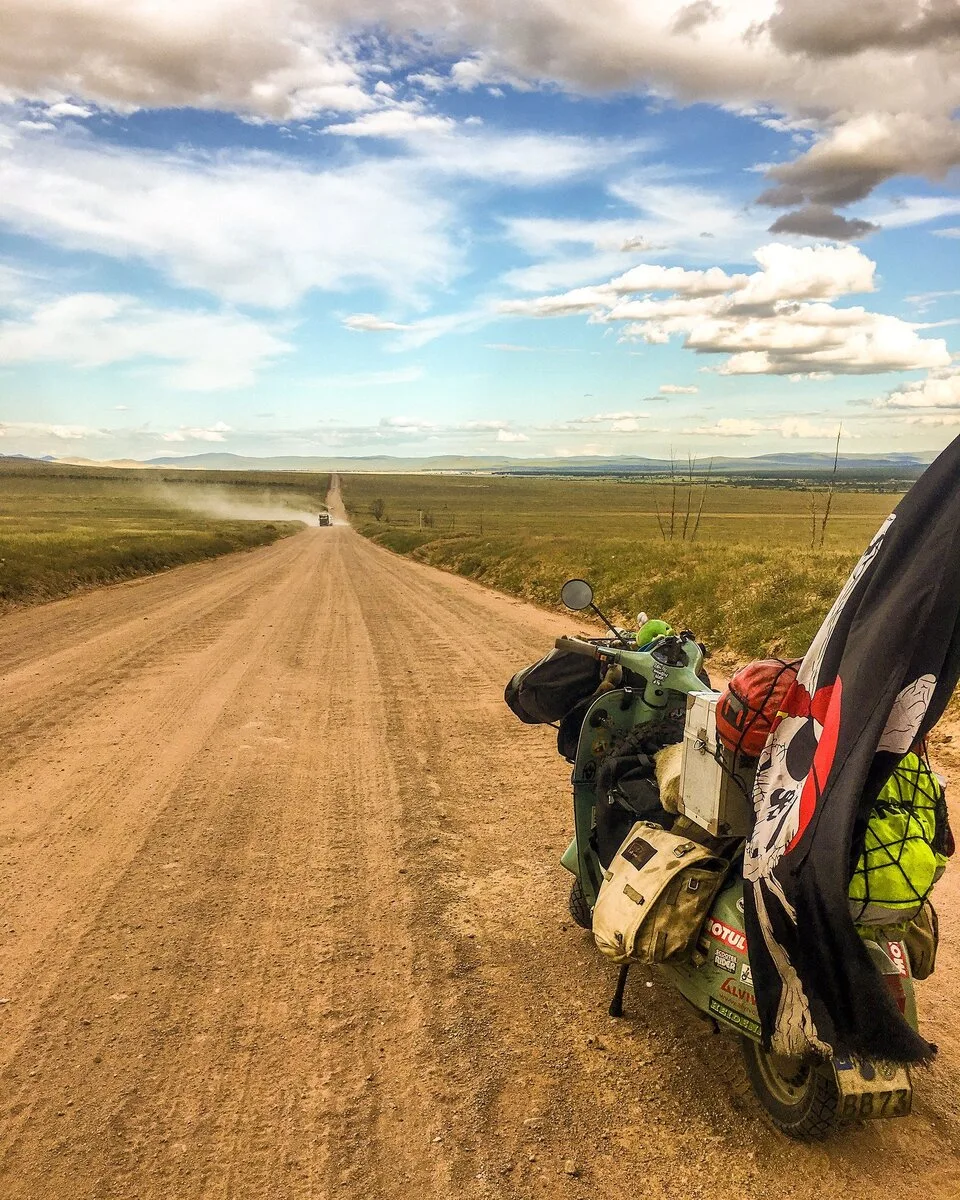
Sometimes when people ask, I share a few experiences from my trips. The obstacles, the lucky moments, the moments where things could have gone significantly worse than they did. And eventually someone asks:
"How many were you? Did you have a team?"
I smile. "No. I am not Ewan McGregor."
What Solo Actually Means
I planned my world circumnavigation for over three years. Alone. I prepared the scooters and positioned them in Utrecht and San Diego. Alone. I was injured, sick, wet, cold, happy, sweating, crying, laughing — nearly all of the time, alone.
No camera crew. No support vehicle. No pillion rider. No logistical aid. No second person to take over when the weather turned or the engine stopped or the collarbone decided to make its presence felt at kilometre 400 of a 450-kilometre day.
People are mostly shocked. They ask why I never ride with a team.
Why Alone Is Sometimes Better
In many situations, riding alone is harder. There is nobody to help when things break, nobody to motivate you at 2am on a wet road, nobody to share the navigation when you are too tired to read the signs.
But on many occasions I was glad not to have the burden of watching out for someone else's safety. Not to be responsible for a camera team's equipment or schedule. Not to have to reach consensus on decisions that needed to be made in thirty seconds.
When I rode into the night down a mountain road with hundreds of curves and fifty dark tunnels in a thunderstorm — that was my decision and my responsibility. When I decided not to see a doctor after the collarbone injury in Siberia and rode on painkillers for three weeks — my problem. When I needed a photo and had nobody to take it, I set up the tripod, used a remote, and took it seven times until it looked right.
That is what you are actually seeing when you look at my photos.
What Solo Made Possible
A team would have slowed me down. On many nights during the world circumnavigation I continued riding into darkness and storms to cover a few more kilometres toward the goal, relying entirely on instinct. That is not a decision you make easily when someone else is depending on you.
Solo riders cross borders quickly and quietly. A convoy attracts attention. A single man on a small scooter is overlooked. I was almost never stopped by police. A team or a convoy would have changed that entirely.
What This Is Not
There are a handful of Vespa adventure riders who operate this way — alone, with no infrastructure. That is a completely different story from a road trip with friends, a support van, and a photographer.
A supported trip with espresso stops and hotels along the French Riviera is fun. It is not a challenge. It is not the kind of experience that changes who you are when you come home. A week or two of holiday with a safety net does not do to a person what three months alone on the road does.
You come home different after months out there. That is the point. That is the only point.
Keep it real.