Vespa Elefantentreffen 2015 — 750 km, -14°C, and a Tent Full of Snow
"There are trips you plan carefully. And then there are trips where you ride a vintage scooter into the Bavarian winter and call it a weekend."
Every January, thousands of serious motorcyclists ride to a frozen valley in the Bavarian Forest. Big bikes. Proper gear. Years of experience. They call it the Elefantentreffen — the world's oldest winter motorcycle meeting, going strong since 1956.
I showed up on a 1979 Vespa.
Her name was Madalina. She'd spent the previous summer dragging me through 32 countries and 22,450 km across Europe and Africa. I figured January in Bavaria would be light work by comparison. I was wrong in ways that were both predictable and deeply personal.
The Plan — Simple on Paper
375 km from Waltenhofen to Solla. Two days at the event. 375 km home. About 750 km total.
Sounds reasonable. Except it's January. In the Bavarian Forest. On a Vespa that was designed for Italian summer roads and has approximately the thermal efficiency of a garden chair with a 200cc engine strapped to it.
| Start | Waltenhofen, Bavaria |
| Destination | Elefantentreffen, Solla, Bavarian Forest |
| Distance | ~750 km total |
| Temperature | Down to -14°C |
| Machine | 1979 Vespa P200E — Madalina |
| Camping | Yes. In a tent. At -14°C. Don't ask. |
Day One — My Fingers and I Part Ways
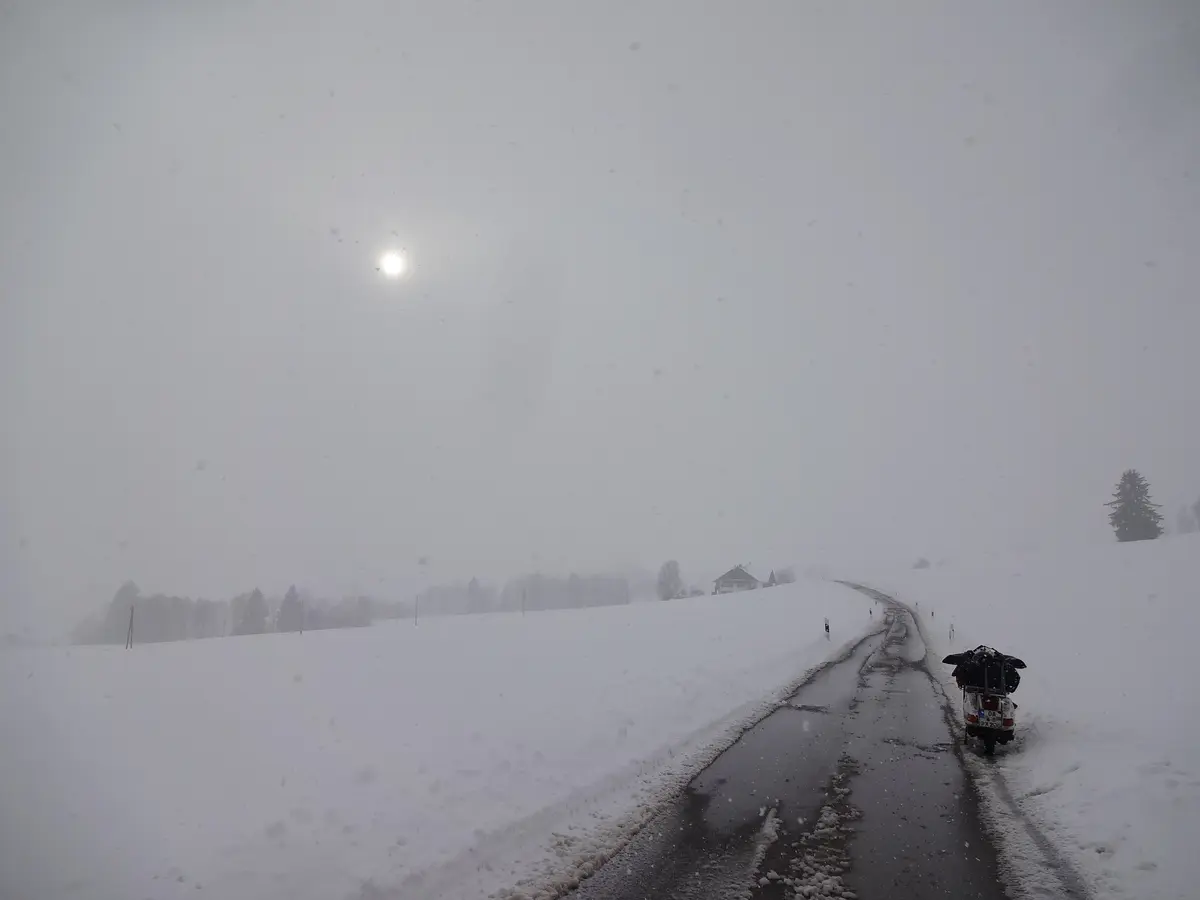
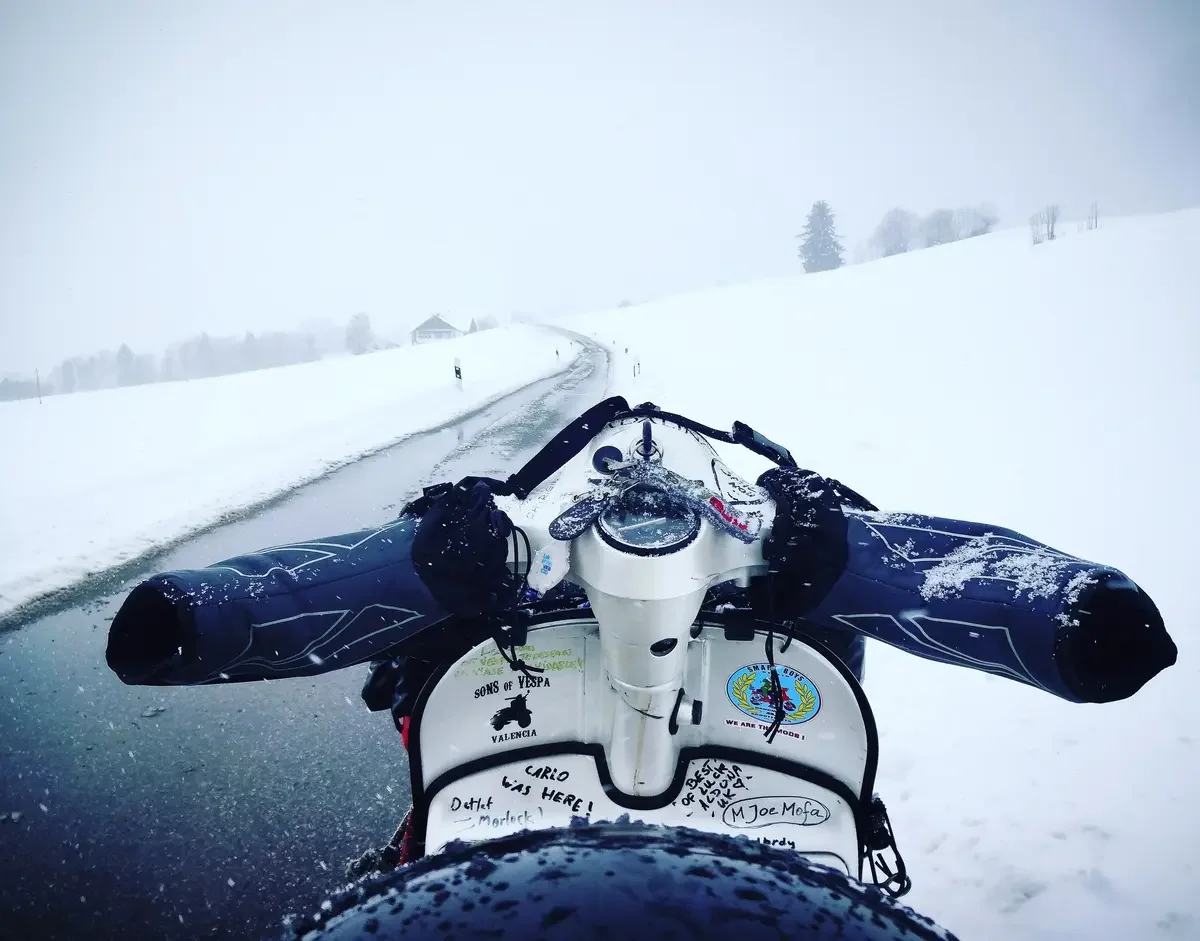
The ride started well. Madalina buzzed through the Allgäu in that reliable, unhurried way of hers — not fast, never fast, but steady in a way that makes you briefly believe everything will be fine.
It was fine. For about an hour.
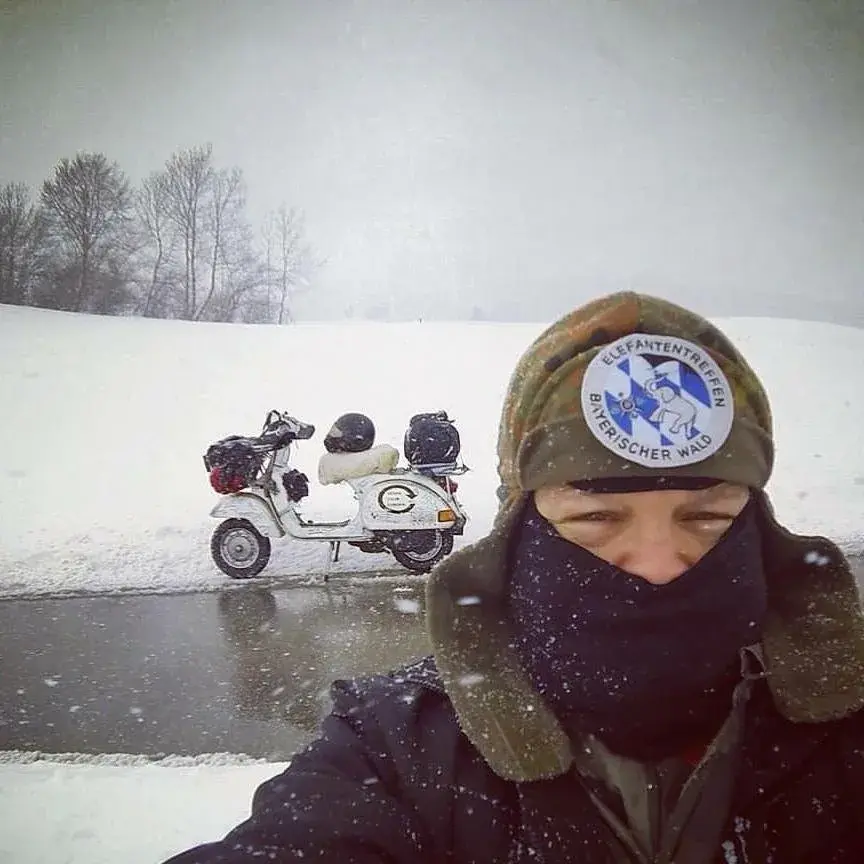
Then the cold arrived. Not the polite kind you describe as "fresh" — the other kind, the kind that works its way through every layer and parks itself in your fingers and refuses to leave. Somewhere around Passau the fingers went first. The toes followed shortly after, handing in their notice without discussion. After that, thinking simplified considerably:
Next fuel stop. Move fingers. Still alive.
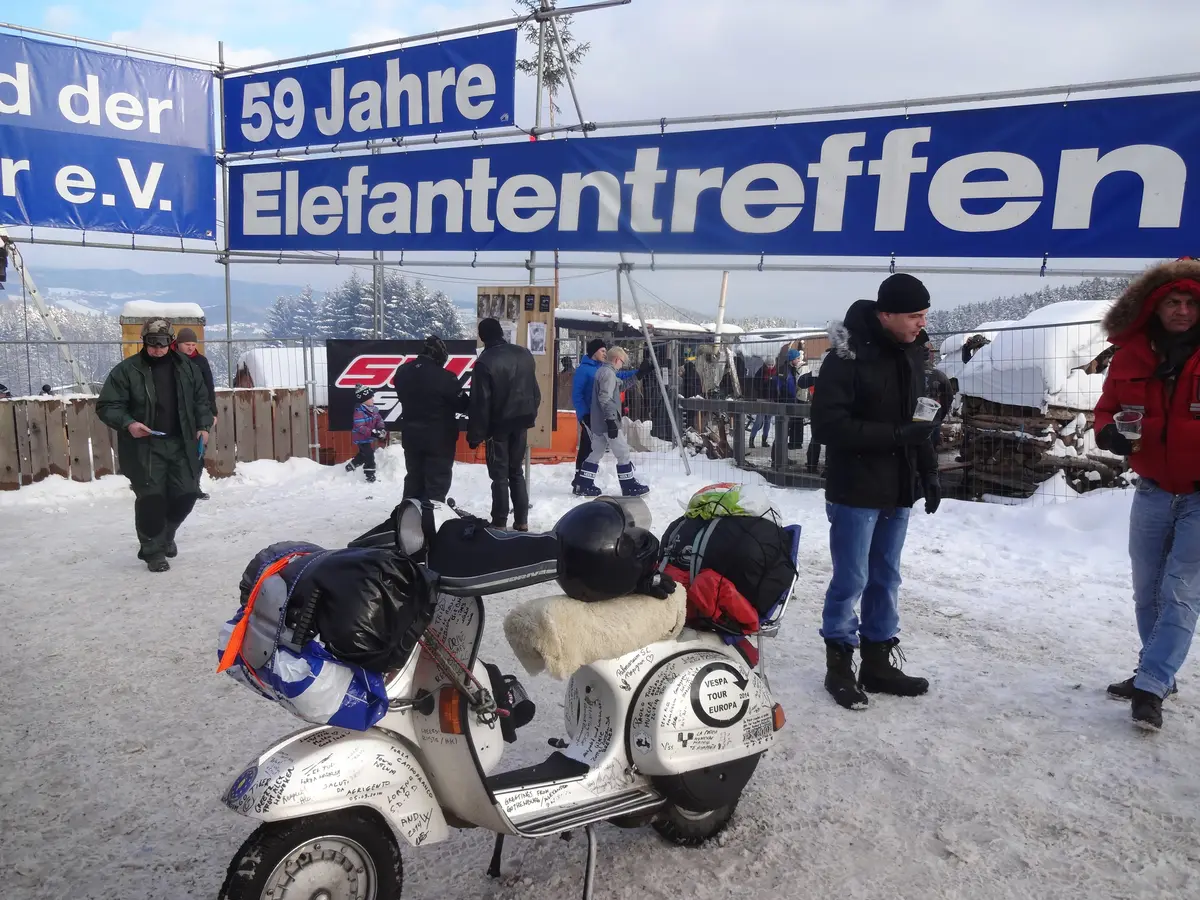
The Bavarian Forest closed in around me. Snow. Then ice. Then that cheerful combination where every movement becomes a negotiation rather than a decision. And then, finally, the descent into the pit — a natural valley bowl where thousands of bikes were already parked, their owners huddled around fires like survivors of something.
The Hay Incident
Here is something I did not expect to do at a motorcycle event: pull hay behind a Vespa. Down an icy slope. Into a valley.
There was a practical reason for this which made complete sense at the time and which I am now unable to fully reconstruct. What I do remember clearly is the physics: traction was theoretical, steering was more of a suggestion, and the slope had opinions of its own.
The Vespa handled it the way the Vespa always handles things — by continuing to move forward and leaving the philosophical questions for later.
And then, unexpectedly: cheering.
Proper cheering. From riders on bikes that cost more than my car — if I had a car — watching this ridiculous little Italian shopping trolley drag hay down a frozen hill like it was normal. Thumbs up. Laughter that wasn't mean. The specific respect reserved for people doing something completely absurd and somehow not dying.
It felt correct.
Night One — It Snowed. Inside My Tent.
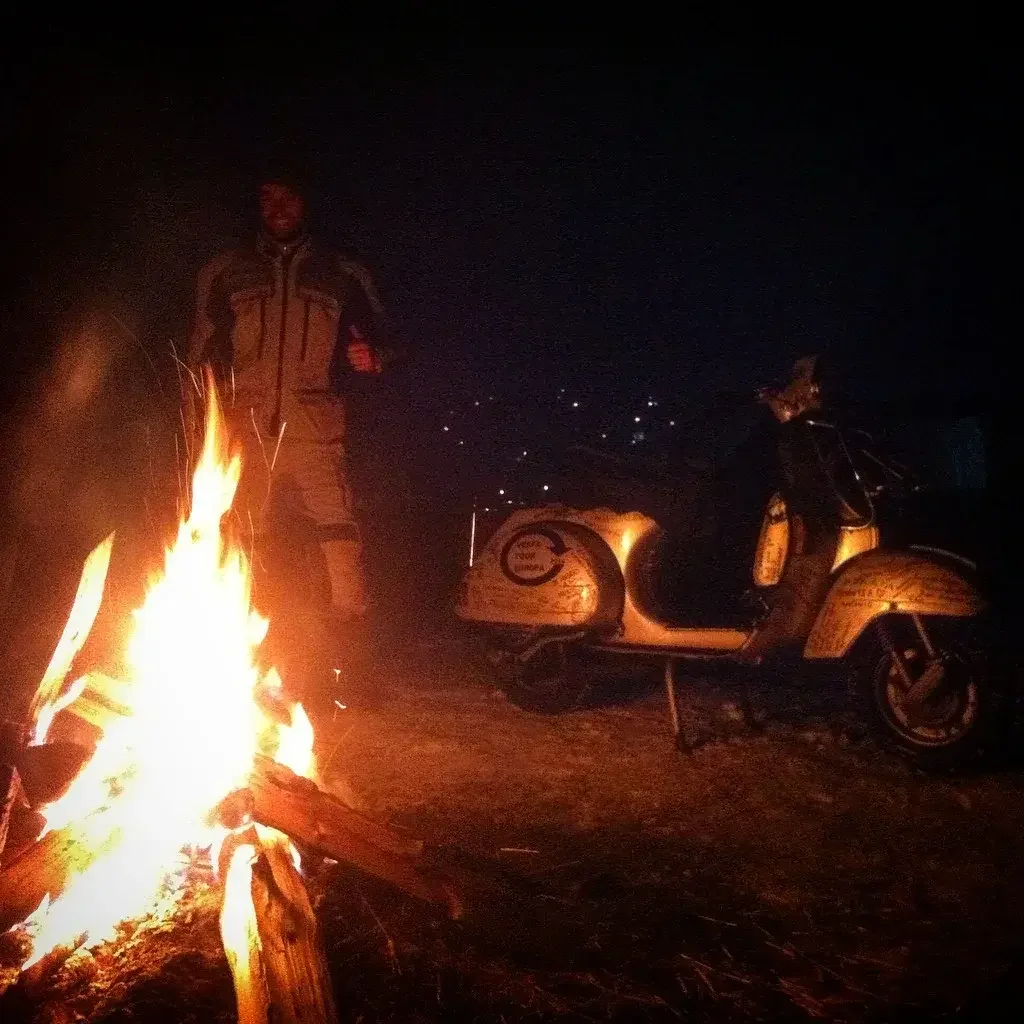
Once dark came, the valley lit up. Fires everywhere — hundreds of them, burning in all directions, the snow catching the light and throwing it back. Smoke in the air. The sound of engines and conversation and someone somewhere playing something on a guitar badly but with conviction.
Warmth: campfires, hot wine, and a few shots administered strictly for medical purposes. You drift from fire to fire, warming your hands, talking to strangers, discovering that every conversation at the Elefantentreffen follows the same script:
"Where did you come from?" — long pause — "On THAT?" — longer pause — "Respect."
Then -14°C arrived.
Inside my tent — fully dressed, in my sleeping bag, wearing every item of clothing I owned simultaneously — something strange happened. My breath froze. Not condensed. Froze. On contact with the tent fabric.
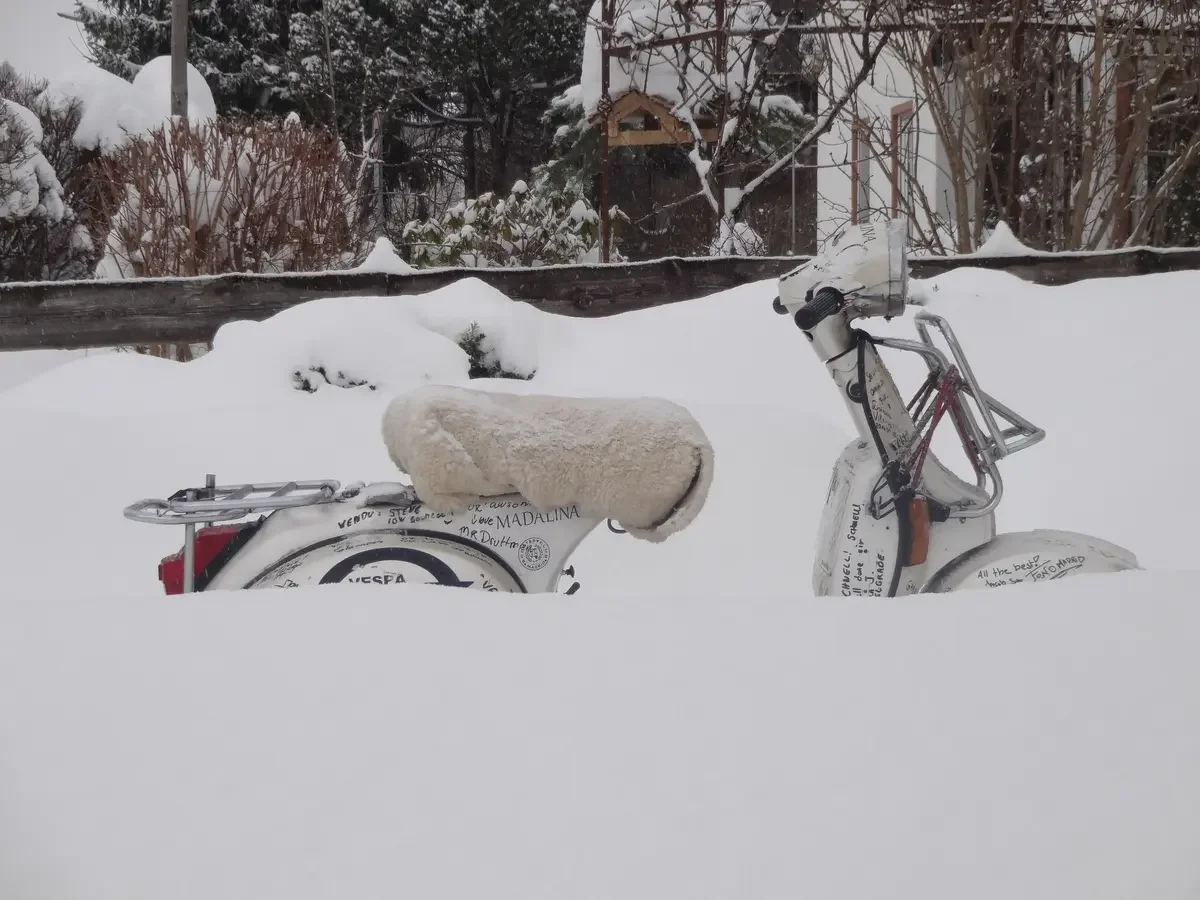
And then it started snowing. Inside the tent.
I lay there for a while considering this development. There was nothing useful to be done about it. The decisions that had led to this moment had already been made. The only rational response was to accept that you are now a person who camps at -14°C in January and experiences weather inside their accommodation, and to wait for morning.
Day Two — Present and Accounted For
Day two was not about doing things. It was about still being there.
Walking through the camp. Looking at frozen bikes. Watching people confidently repair machines that had no business working anymore. Nobody seemed particularly bothered by any of it. There's a specific atmosphere at events like this — not the forced cheerfulness of a festival, but something quieter, the shared acknowledgement that everyone present has made choices that normal people would describe as unnecessary.
Madalina stood among adventure bikes worth ten times her resale value and looked completely at home. Several people stopped. A few took photos. One man told me in very serious German that I was "komplett wahnsinnig." He meant it as a compliment. I took it as one.
Day Three — Going Home
Packing took longer than it should. Everything was cold, everything smelled of smoke, and everything had opinions about being folded. Starting Madalina after two nights at -14°C felt like asking a favour that might reasonably be refused.
First kick.
Of course.
375 km home. Same road, same cold, completely different feeling — because the hard part was done, and everything between Solla and Waltenhofen was just kilometres. Somewhere in the middle of all those kilometres, with numb hands and a clear head, the thought landed properly:
That was completely ridiculous. And completely worth it.
What 750 km in January Actually Proves
Not much, practically speaking. But that wasn't the point.
Madalina had just crossed the Alps in summer. Now she'd done 750 winter kilometres, camped at -14°C, and started first kick after two nights in a frozen valley. She wasn't a summer machine. She wasn't a fair-weather Vespa. She was the kind of machine that shows up when you ask something unreasonable of her.
That matters more than it sounds.
And somewhere in the back of my mind, ever since: maybe I should go back.
Because you don't go to the Elefantentreffen on a Vespa because it's easy. You go because it isn't. And once you've pulled hay down an icy slope while strangers cheer and watched it snow inside your own tent at midnight — something shifts. Not dramatically. Just quietly.
Once a scooterist, always a scooterist.
Frequently Asked Questions
What is the Elefantentreffen? The world's oldest winter motorcycle meeting, held in Bavaria every January since 1956. No stage, no schedule, no entry fee — just bikes, fire, and cold. Attendance on a vintage Vespa is optional but strongly recommended if you need to know what you're made of.
How cold does it get? In January 2015 it hit -14°C at night. Cold enough for breath to freeze inside a tent. Cold enough for fingers to stop cooperating within 30 minutes of riding. Cold enough that hot wine stops being a drink and becomes a survival strategy.
Is a Vespa P200E actually suitable for winter riding? Technically no. In practice: yes, with the right clothing, realistic expectations about your fingers, and a machine in good mechanical condition. Madalina completed 750 km in January without breaking down. The drum brakes needed more distance to stop than usual. Everything else worked fine.
How far is it from Waltenhofen? 375 km each way. 750 km total including the riding on site. Solo, on the Vespa, in January.
Would you do it again? Yes.
Want to read more?
📷 Galería de fotos
fotos más